
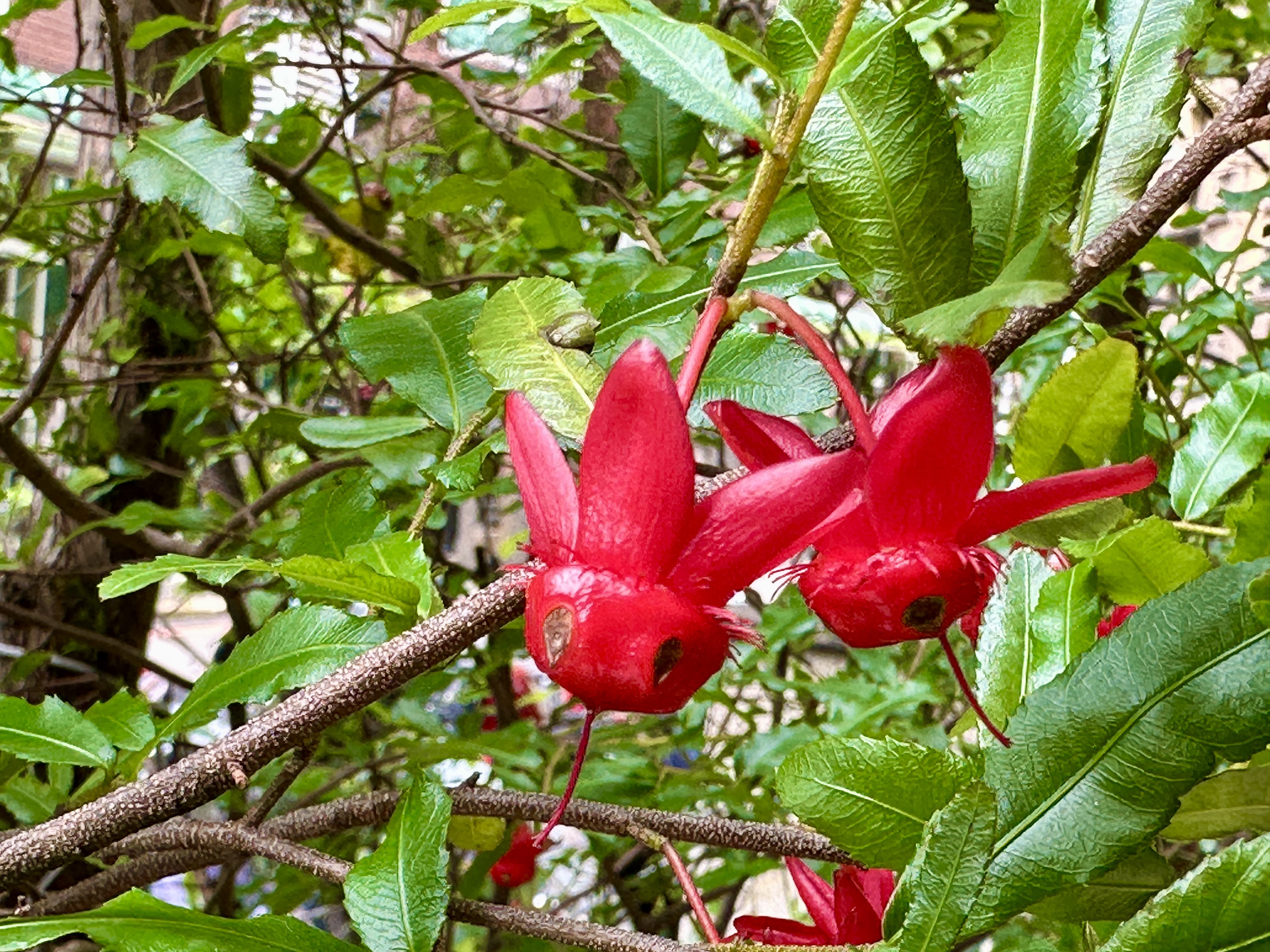

花冠仙子
枝葉之間,一抹猩紅悄然懸垂,如同尚未言說的語言,凝結在風的邊緣。那不是單純的花,也不是果,而是一種介於形與意之間的存在——彷彿世界在自身邊界上,嘗試以具象去承載某種尚未完成的抽象。
我凝視著它們,像凝視一段未被翻譯的思想。紅色的外殼飽滿而光澤,卻又帶著某種內斂的靜默;它們微微張開,如同將要發聲的唇,又像沉思中的眼。這種形態,不只是自然的偶然,而更像是一種訊息的編碼——一種將感知與意義交織的結構。
或許,人類最後的防線,正存在於此:將具象轉化為含有詩意的抽象。不是逃離現實,而是在現實之中,重新編排其符號,使其不再只是「物」,而是「意的載體」。當我們說一朵花是“仙子”,並非錯認,而是讓語言跨越其原本的邊界,使世界在命名之中獲得第二次生成。
這正是一種異質能力的相互糾纏——感官與概念、物質與語言、直觀與推理,在同一時刻彼此滲透。花不再只是植物學的對象,而是進入一種跨維度的關係網絡:它既是視覺的刺激,也是情感的觸發,更是思維的引子。於是,「看見」本身,變成了一種創造。
在這樣的瞬間,我們似乎接近了柏格森所說的那種物我共感(sympathie)。不是站在外部分析對象,而是讓自身的意識流與其內在節奏對齊,進入其生成的時間之中。這種直觀,並非模糊的感覺,而是一種對存在的侵越性認識——它穿透表層,直抵生成的脈動。
藝術,於是與哲學在此交會。藝術行動不再只是再現,而是一次深入存在的實驗;哲學直觀也不再只是抽象推演,而是一種貼近生命流動的觸摸。兩者之間的親緣性(parente),不在於形式,而在於它們都試圖越過既定的語言框架,去捕捉那尚未被命名的真實。
而那兩枚懸掛於枝頭的「花冠仙子」,正靜靜地見證著這一切。它們不說話,卻讓世界變得可說;它們不思考,卻引發思想。或許,在這樣的凝視之中,我們並非在觀看自然,而是在與某種更深層的存在進行共振。
那是一種尚未完成的語言,一種仍在生成的真理。
The Corolla Fairy
Amid the branches and leaves, a streak of crimson hangs quietly—like a language not yet spoken, suspended at the edge of the wind. It is neither simply a flower nor merely a fruit, but something that exists between form and meaning—as if the world, at its own boundary, is attempting to let the concrete bear an as-yet unfinished abstraction.
I gaze at them as one would gaze upon an untranslated thought. Their red shells are full and lustrous, yet carry a kind of inward stillness; they part slightly, like lips about to speak, or eyes immersed in contemplation. This form is not merely an accident of nature, but more like an encoding of information—a structure in which perception and meaning are interwoven.
Perhaps the last line of defense for humanity lies precisely here: in transforming the concrete into a poetic abstraction. It is not an escape from reality, but a reconfiguration of its symbols within reality itself, so that things are no longer merely “objects,” but become “carriers of meaning.” When we call a flower a “fairy,” we are not mistaken; rather, we allow language to cross its original boundaries, granting the world a second genesis through naming.
This is a mutual entanglement of heterogeneous capacities—sensation and concept, matter and language, intuition and reasoning—each permeating the other in the same moment. The flower is no longer merely a botanical object, but enters a cross-dimensional network of relations: it is at once a visual stimulus, an emotional trigger, and a catalyst for thought. Thus, “seeing” itself becomes an act of creation.
In such a moment, we seem to approach what Henri Bergson described as sympathie—the resonance between self and object. Rather than standing outside and analyzing, one aligns one’s stream of consciousness with the inner rhythm of the thing, entering its duration of becoming. This intuition is not vague feeling, but an invasive form of knowing—one that penetrates surfaces and reaches the pulse of genesis.


發表迴響