
- 浮現 Emergence
有時候的浮現,
並不是事物忽然長高了,
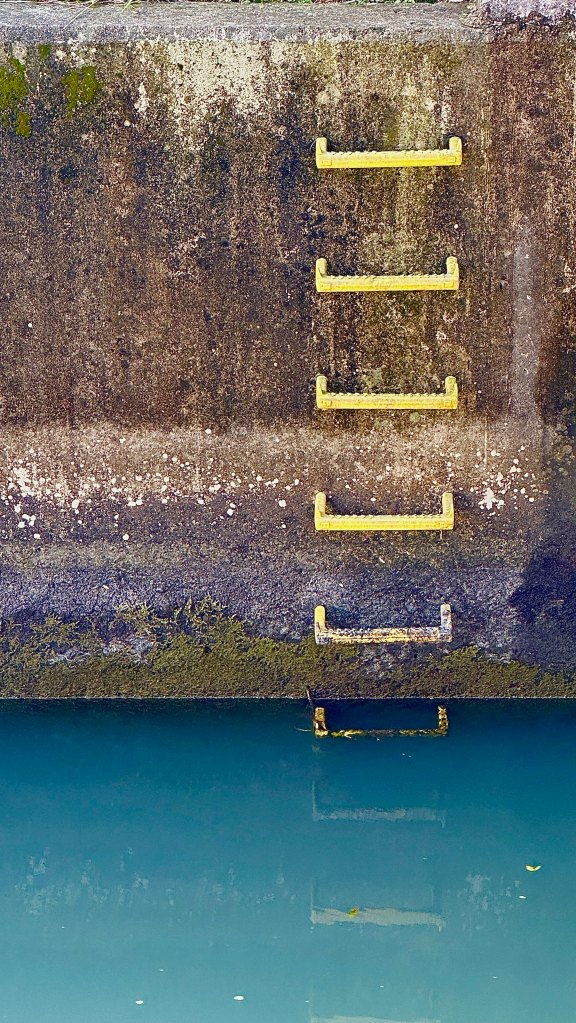
而是水,靜靜地退去了。照片裡的階梯原本就存在。
它們嵌在牆上,沉默、規律、毫不張揚。
當水位高漲時,階梯並未消失,
只是被覆蓋、被折射、被誤以為不存在。
直到水面緩緩下降,
一階一階,黃色的邊緣重新露出,
像記憶回到視野,
像真相回到光中。這樣的浮現,
不是向上攀升的動作,
而是遮蔽的撤離。我們常以為「看見」來自於追逐,
來自於不斷堆疊更多知識、更多論述、更多聲音。
但更多時候,
真正的理解,
發生在清理之後——
當多餘的情緒被放下,
當過度的詮釋被鬆手,
當恐懼與投射不再佔據水面。水退了,
不是因為階梯努力證明自己,
而是因為環境終於允許它被看見。事前的整理也是如此。
我們以為是在為未來做準備,
其實是在為「真理的顯現」騰出空間。
刪去不必要的假設,
拆除慣性的信念,
讓思考回到結構本身。
於是,那些原本就存在的階梯——
秩序、因果、方向——
自然浮現,
成為可以踏足的路。攀上真理,
並非因為我們變得更高明,
而是因為我們終於不再被水淹沒。當水面退去,
階梯就在那裡。
不是邀請我們仰望,
而是允許我們,一步一步,
走上去。Sometimes, emergence
is not the act of something rising upward,
but the quiet retreat of the water.The steps in the photograph were always there.
Embedded in the wall—silent, orderly, unassertive.
When the water was high, they did not disappear;
they were merely covered, refracted,
mistaken for absence.
Then the surface slowly receded,
and step by step,
the yellow edges returned to sight—
like memory reentering awareness,
like truth returning to the light.This kind of emergence
is not a movement of ascent,
but the removal of concealment.We often believe that “seeing” comes from pursuit—
from accumulating more knowledge,
more arguments, more noise.
Yet more often,
true understanding arises after clearing—
when excess emotion is released,
when over-interpretation loosens its grip,
when fear and projection no longer occupy the surface.The water recedes,
not because the steps strive to prove themselves,
but because the conditions finally allow them to be seen.Preparation is much the same.
We think we are getting ready for the future,
when in fact we are making room
for the emergence of truth.
By removing unnecessary assumptions,
by dismantling habitual beliefs,
by letting thought return to its underlying structure,
the steps that have always existed—
order, causality, direction—
naturally emerge
and become a path we can walk.To ascend toward truth
is not because we have grown wiser,
but because we are no longer submerged.When the water retreats,
the steps are already there.
They do not ask us to gaze upward,
but simply allow us,
step by step,
to walk on. - 雲白 Cloud White

這不是一種單純的白。
它像被時間輕輕揉皺的雲層,層層堆疊,靜靜伏臥。
沒有邊界,卻充滿起伏;沒有喧嘩,卻蘊藏重量。白色,向來被視為高雅與潔淨的象徵。
而在這個資訊急速翻湧、情緒持續過載的時代,
我們在光亮之中迷失方向,
於聲音之中渴望一片無聲。於是,白成了一種召喚——
不是空白,而是暫停。
不是逃離,而是回到內在。當視線落在這片雲白之上,
思緒開始放慢,呼吸變得可聽。
放鬆與專注在此不再對立,
它們共同為創意開闢出一個遼闊而溫柔的空間。
想像得以漫遊,形體在模糊中浮現,
尚未命名,卻已隱約成形。白色看似中性、簡約,
然而在光的層次中,它其實並不單純。
它是紅、綠、藍的集合,
是一切顏色尚未分化之前的潛能狀態。
如同尚未說出口的語言,
或尚未被定義的思想。那麼,在人工智慧的世界裡,
語法與語義精密運作,
模型能否真正理解——
這種「平靜的白」所承載的經驗?
演算法是否能感知,
這並非空無,而是一種高度壓縮的可能性?雲白,不只是顏色。
它是一個介面,一段緩衝,一次允許尚未決定的存在。
在萬物急於被定義之前,
它選擇輕輕舞動,
停留在雲上。2026 Pantone 年度代表色 — PANTONE 11-4201 Cloud Dancer(雲上舞白)
Pantone Color of the Year 2026 — PANTONE 11-4201 Cloud Dancer
This is not a simple white.
It resembles clouds gently folded by time—
layered, crumpled, quietly resting.
Without clear boundaries, yet full of structure;
without noise, yet carrying weight.White has long symbolized elegance and purity.
But in an era of accelerating information
and continuous emotional overload,
we lose direction within brightness itself,
and begin to long for silence amid the noise.Thus, white becomes a call—
not emptiness, but a pause.
Not an escape, but a return inward.As the gaze settles upon this cloud-like white,
thoughts begin to slow,
and breathing becomes perceptible.
Relaxation and focus no longer oppose one another;
together, they open a gentle yet expansive space for creativity.
Imagination is allowed to wander,
emerging gradually from ambiguity into form—
unnamed, yet already present.White may appear neutral and minimal,
but in the language of light, it is anything but simple.
It is the convergence of red, green, and blue—
a state of potential before differentiation.
Like language before it is spoken,
or thought before it is defined.And so, within artificial intelligence—
where syntax and semantics operate with precision—
can a system truly comprehend
this “algorithm of calm” embedded in white?
Can computation perceive that this is not absence,
but a densely compressed field of possibility?Cloud White is not merely a color.
It is an interface, a buffer,
a permission for undecided existence.
Before all things rush toward definition,
it chooses to move lightly—
dancing above the clouds. - 泛化 Generalization

法界緣起
在佛教《華嚴經》的宇宙論中:
萬法互入、互攝、互現。
每一法既是自身,也是全部法的映現;每一事件都包含全宇宙因緣的回聲。
泛化是一種“關係性宇宙論”的工程版本。華嚴哲學的宇宙論可用三句話概括:
- 一即一切,一切即一
- 諸法互入
- 諸法互現
法藏國師用「因陀羅網」比喻:
每一顆寶珠映照整個網絡,而整個網絡也映照於其中一珠。
這強調 關係本體論(network ontology):- 事物不是獨立的
- 整體不是碎片的總和
- 每個局部都攜帶完整宇宙的訊息
「一中有多,多中有一」
「局部即全體,全體藏於局部」智慧不是記憶,而是關係。 不是孤立的資訊,而是網絡化的互動。 不是單一因果,而是全域涌現。
Dependent-Arising of the Dharma Realm (Dharmadhātu-Pratītyasamutpāda)
In the cosmology of the Avataṃsaka Sūtra (Huayan Jing),
all phenomena interpenetrate, mutually include, and mutually manifest one another.
Each phenomenon is itself, yet also the reflection of all phenomena;
each event contains the resonance of the entire universe of conditions.
In this sense, generalization in machine learning is an engineering analogue of a relational cosmology.The Huayan philosophical universe can be summarized in three statements:
- “One is all; all is one.”
- Mutual interpenetration of all phenomena (諸法互入).
- Mutual manifestation of all phenomena (諸法互現).
Fazang (法藏) illustrated this with the metaphor of Indra’s Net:
each jewel reflects the entire net, and the entire net is reflected within each jewel.
This highlights a network ontology:- Things do not exist independently.
- The whole is not merely the sum of fragments.
- Every local node carries information about the entire cosmos.
Thus:
- “The one contains the many, and the many contain the one.”
- “The local is the whole; the whole is concealed within the local.”
Wisdom, therefore, is not memory but relation—
not isolated information, but networked interaction;
not linear causality, but global emergence. - 稀疏化 Sparsification

《金剛經》言:「凡所有相,皆是虛妄。」
正如認知中的「妄相」。稀疏化過程透過移除不必要結構,使得以「見實相」(即語言規則的深層模式),其佛教的「觀空」。
佛教的「空性」不只是「沒有」,而是「緣起性空」(因為依賴條件而生,故無自性)。稀疏化之所以有效,是因為它捕捉了關聯性(Attention/Dependencies),而非死記硬背單一。這更符合「緣起」的概念。《法華經》指出佛陀以「一佛乘」為究竟,但為順應眾生根器而施「三乘」或多種法門,此即「方便法」。去除不必要以見真性」
智慧不是來自累積,而是來自「捨」。佛教《法華經》認識論以「去相」與「因緣分流」為智慧核心n the Diamond Sutra it is said: “All forms that can be perceived are illusory.”
This corresponds to the notion of “illusory appearances” in cognitive science.
The process of sparsification, by removing unnecessary structures, enables the model to “see the true form”—that is, the deep structural patterns underlying language.
In this sense, it resembles the Buddhist practice of contemplating emptiness (觀空).In Buddhism, emptiness (śūnyatā) is not mere negation or nothingness; rather, it is dependent-arising emptiness (pratītya-samutpāda–śūnyatā):
because things arise from conditions, they lack inherent existence.
Sparsification is effective precisely because it captures relational structures (attention/dependencies) rather than memorizing isolated units.
This aligns far more closely with the idea of dependent co-arising.The Lotus Sutra teaches that the Buddha’s ultimate teaching is the One Vehicle (Ekayāna), yet he provisionally offered the “Three Vehicles” and various methods to suit the capacities of different beings.
This is the doctrine of skillful means (upāya)—removing the unnecessary so that the true nature can be seen.Wisdom does not come from accumulation,
but from letting go.
The epistemology of the Lotus Sutra places de-phenomenalization (去相) and conditional unfolding (因緣分流) at the core of wisdom. - 謎 Riddle

哲學家 朱立安•巴吉尼 與 彼得•佛索 的 ”哲學家的工具箱” 中說到 “理由與原因之間的關係,也一直是對理解人類行動有興趣的哲學家會探究的問題。
“有原因導致的行為是被決定的,而非自由的”
“理由被視為與原因不同,也是因為我們談到它們的方式「解釋的形式」——似乎互有差異”
“對某些思想家來說,人類單動與自然事件各自適用哪種解釋的差別,標示出社會與自然科學之間的差異,或許甚至也指出這些科學研究的是不同種類的存在。”
謎,是語言之中自設的迷宮,
是人類以言構築未知,
以思解構未知的過程。
The passage from Julian Baggini and Peter S. Fosl’s The Philosopher’s Toolkit states:
“The relationship between reasons and causes has also always been a question explored by philosophers interested in understanding human action.”
“Action caused is determined, not free.” (or a more formal philosophical version: “Action that is caused is determined, and therefore not free.")
“Reasons are also considered to be distinct from causes because of the way we talk about them—the ‘form of explanation’—which seems to differ.”
“For some thinkers, the difference in which explanations apply to human action versus natural events marks the divide between the social and natural sciences, and perhaps even suggests that these sciences study different kinds of existence.”
“The riddle is a self-imposed labyrinth within language; It is the process by which humanity constructs the unknown through speech, and deconstructs the unknown through thought.”
- 人生的有趣 The Fun of Life
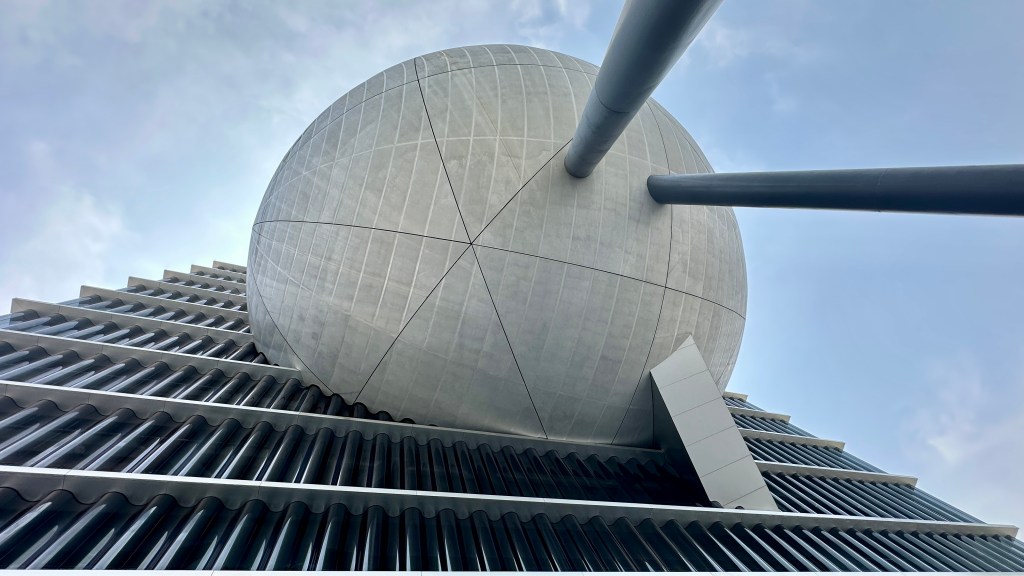
人生多數時候都在強調追求快樂,但我們往往過度依賴外在的事物,忽略了內心的修練。其實,若將追求的焦點放在『好奇和人生的有趣』,外界干擾會少得多,內在條件也更容易培養,不必陷入無謂的內耗。世間萬物總有兩個面向——好與壞、過去與未來,而真正的有趣,就在這些張力與對比之間悄然生成;在矛盾裡、在轉折裡,閃現出最動人的光芒。
「快樂常依附於外物,所以難以長久;好奇卻生於心中,因此更容易滋養。」For much of our existence, we are dedicated to the pursuit of happiness, yet we frequently become overly reliant on external circumstances, overlooking the necessity of internal refinement. Shifting the focus of our pursuit to curiosity would significantly reduce external distractions, allowing for the easier cultivation of internal resources and preventing futile internal depletion.
All things in the world possess a duality—good and bad, past and future—and genuine fascination subtly arises from these very tensions and contrasts. It is within the paradoxes and the transitions that the most touching illumination shines through.
“Happiness often depends on external things, so it is hard to sustain; curiosity, however, is born in the heart, making it easier to nourish." - 雲山水 Clouds, Mountains, and Water

雲起山含翠,
水明影自開。
煙波無限遠,
心境與天齊。Clouds arise, mountains draped in green,
Water clears, its mirrored scene.
Boundless mists stretch far away,
The heart with heaven flows serene. - 石上禪語 Zen Words on Stone
石上禪語
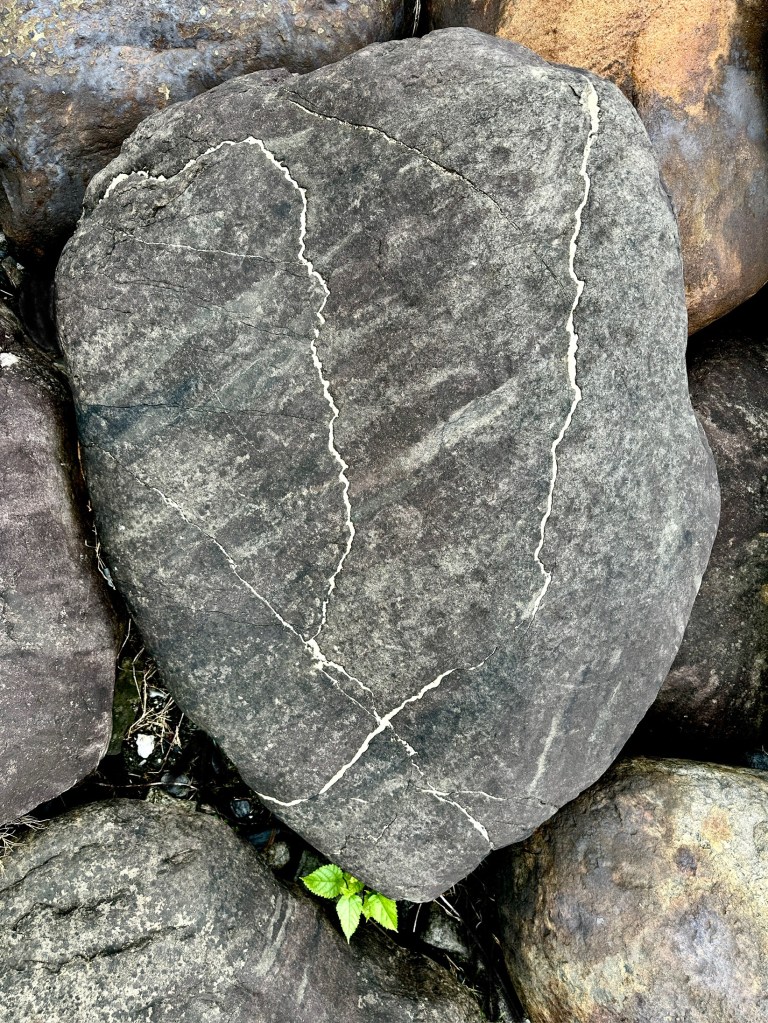
石之重, 如吾身之負。
裂紋縱橫,非破,乃路。
行於石堆間,步步難前。
俯視其脈絡,知方向可尋。
人生如此,重非障,裂非殘。
循紋而行,處處皆生機。
Zen Words on Stone
The weight of stone
is like the burdens I bear.
Cracks run through it —
not as breaks, but as paths.
I walk among these stones,
each step heavy and uncertain.
Yet when I look closely
at its veins and lines,
I see direction revealed.
Life is the same:
weight is not an obstacle,
cracks are not flaws.
Follow the lines,
and everywhere, life emerges.
- 玻璃海 Glass Sea
玻璃海
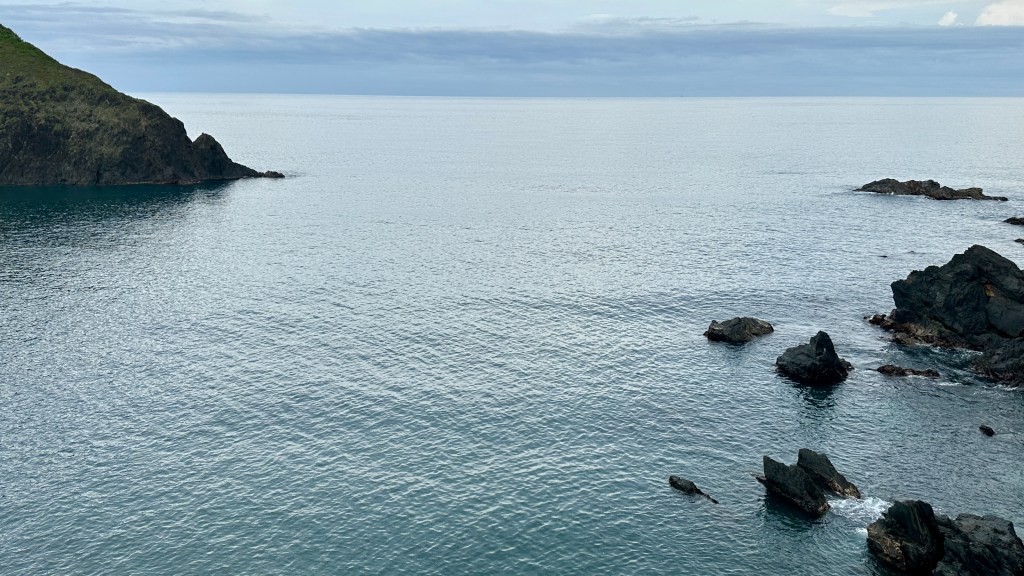
這片玻璃海
平靜得幾乎透明
彷彿可以看見
我們心靈最深處的倒影人生裡
總有那麼一些時刻
我們感到脆弱
如這薄薄的海面
在光裡閃爍
看似無懈可擊
卻也容易碎裂於是我們小心呵護
害怕風起,怕波動
怕一切打碎了自己但
真正的玻璃海
不只是靜止的映照
它在深處翻湧
在寬廣裡包容若我們願意學習
如海一般的胸懷
無論何時
必有藍天
倒映其中Glass Sea
This glassy sea
So calm it seems transparent
As if we could see
The deepest reflection of our souls
In life
There will always be moments
When we feel fragile
Like this thin sea surface
Gleaming in the light
Seemingly flawless
Yet so easily shattered
So we guard it carefully
Afraid of the wind, afraid of the waves
Afraid that everything
Might break us apart
But
A true glass sea
Is not just a still reflection
It stirs in its depths
It embraces with its vastness
If we dare to learn
To hold a heart as open as the sea
No matter what comes
There will always be a blue sky
Mirrored within
- 晨曦田影 Morning Field and Cloud Reflections

晨曦雲影清如洗
秧苗初插水中生
平田倒映千重翠
一片新涼滿濃情
Morning clouds, so pure and bright,
New seedlings rise in mirrored light.
A thousand greens reflect so clear,
Cool freshness fills the land with cheer. - 初心 Original Intention
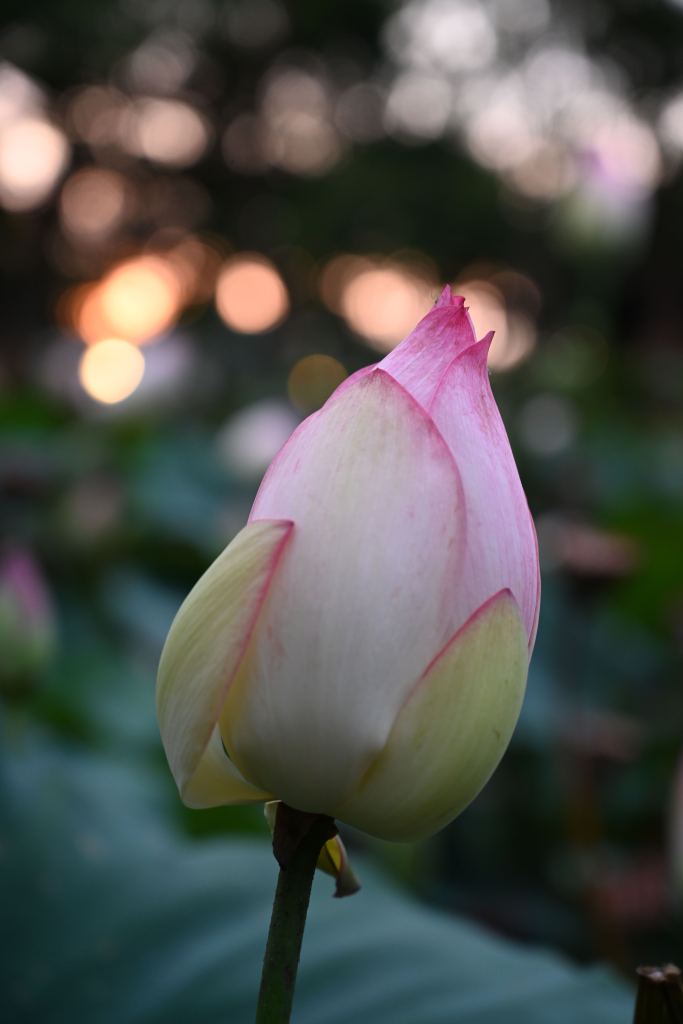
一朵含苞待放的荷花
靜靜立於晨昏交界的池畔
粉白的瓣尖,微微透出光
那是最初的願望
未曾張揚,卻潔淨無瑕
在人生漫長的風雨裡
我們都曾擁有
這樣一顆
聖潔的初心
未開,卻已完整
未盛放,卻已美麗
守護它
不只是輕柔地呵護
更需要無懼的信心
與不變的堅持
就像這荷花
靜靜等待
在日出與日落之間
默默醞釀,終將綻放
於屬於自己的
最燦爛時光
Original Intention
A lotus bud yet to bloom
Stands quietly by the pond
At the border of dawn and dusk
Its pink-white tip softly glowing
This is our very first wish
Untold, yet pure and flawlessThrough the long storms of life
We all once held
Such a heart
Sacred and original
Unopened, yet already complete
Not yet in full bloom, yet beautifulTo protect it
Is not only to cradle it gently
But to hold unyielding faith
And unwavering persistenceJust like this lotus
Waiting in stillness
Between sunrise and sunset
Silently nurturing, until one day it blossoms
Into its own
Most radiant moment - 一盞明燈與月亮的心

“Like the streetlamp and the distant moon —
就像路燈和遙遠的月亮—
One lights the road ahead, the other provides a quiet sense of calm and direction.
一個照亮了前方的道路,另一個提供了一種安靜的平靜和方向感。
In moments of ambiguity, we can choose to be the light.
在模稜兩可的時刻,我們可以選擇成為光明。
That is how I strive to lead.
這就是我努力主管的方式。"
- 張力的天際
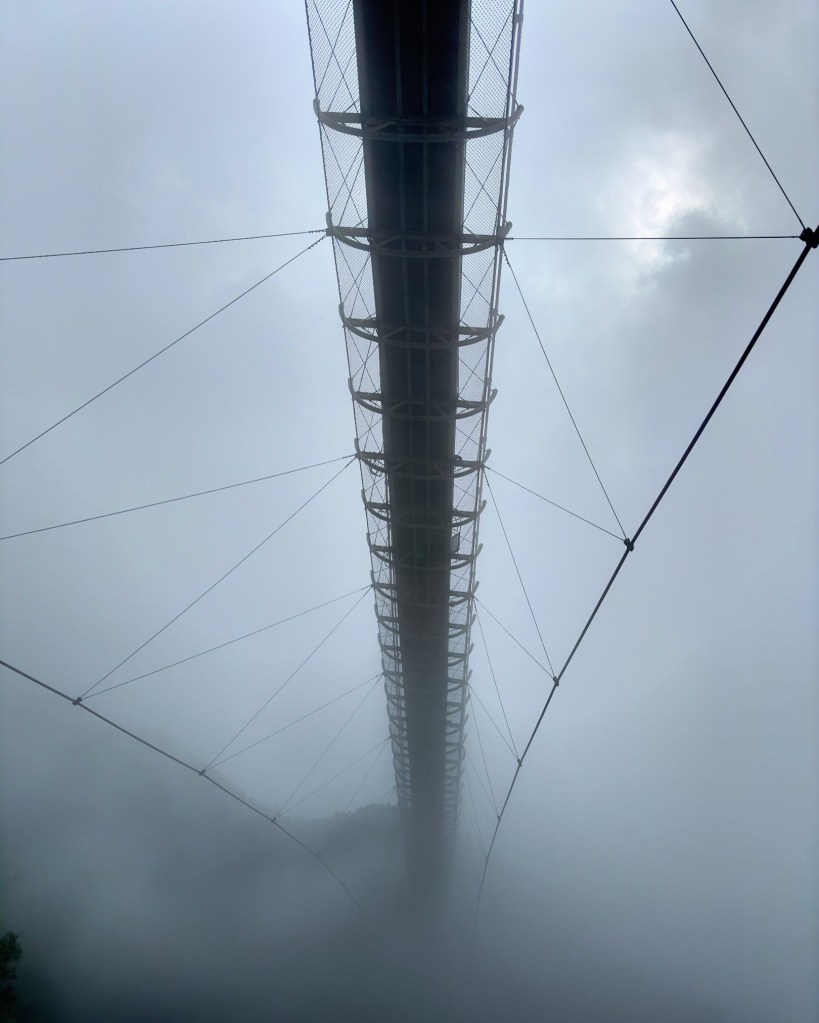
張力的天際
鋼索拉開霧的邊界,
一條橋,懸在空與光之間。
無聲的力,撐起遠方,
像意志穿越天際,
靜而不斷。
Tension in the Sky
Steel lines stretch the edge of mist.
A bridge hangs between air and light.
Silent force holds the horizon —
still,
unbroken. - 我和我的影子
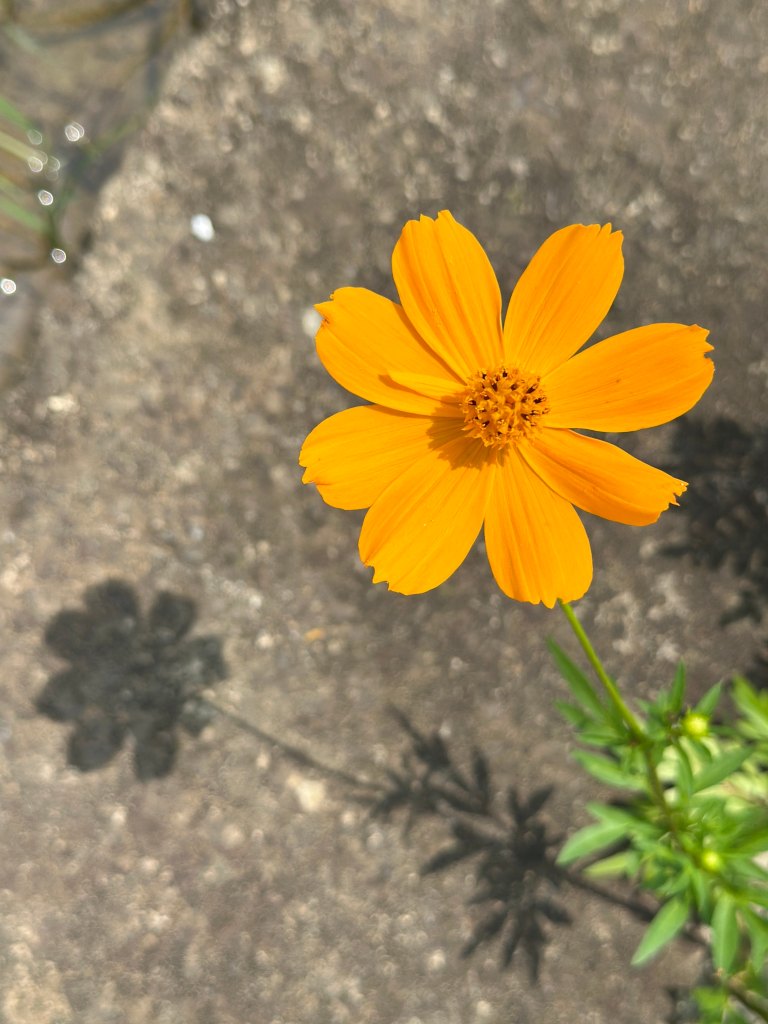
我和我的影子
一花開石上,孤豔對斜陽。
影隨香氣動,靜與我同芳。
不語形常在,無聲意自長。
朝迎光照暖,暮歸共蒼茫。
Me and My Shadow
I bloom alone on sun-warmed stone,
open to the sky,
but never truly alone —
my shadow stays close by.
It doesn’t speak,
but it knows my shape,
follows every lean and sway,
quiet in the heat of day.
We stretch together toward the light,
we fade as evening starts to fall.
If I am here to feel the sun,
then it is here to feel it all.
1 至 2 分鐘
 PaliPali