
“日月二神:在明暗之間生成的意識、時間與宇宙秩序”
“Consciousness, Time, and Cosmic Order Born Between Light and Shadow”
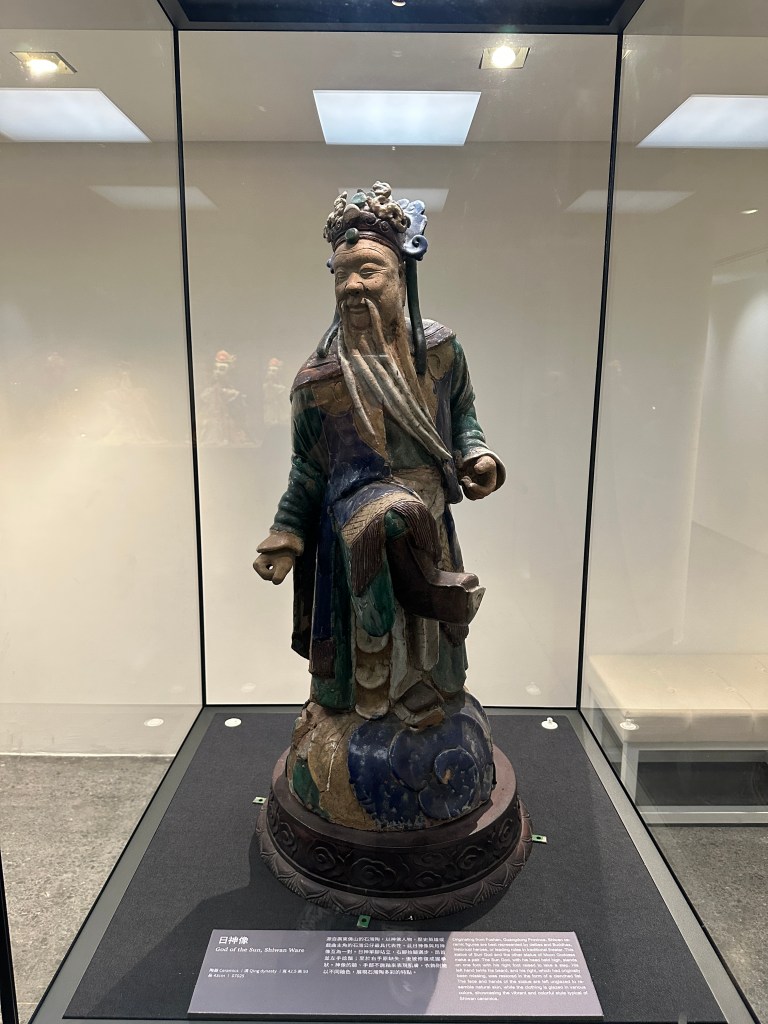
日神:單腳站立,右腳抬起邁步,顯 陽剛、進取、動勢
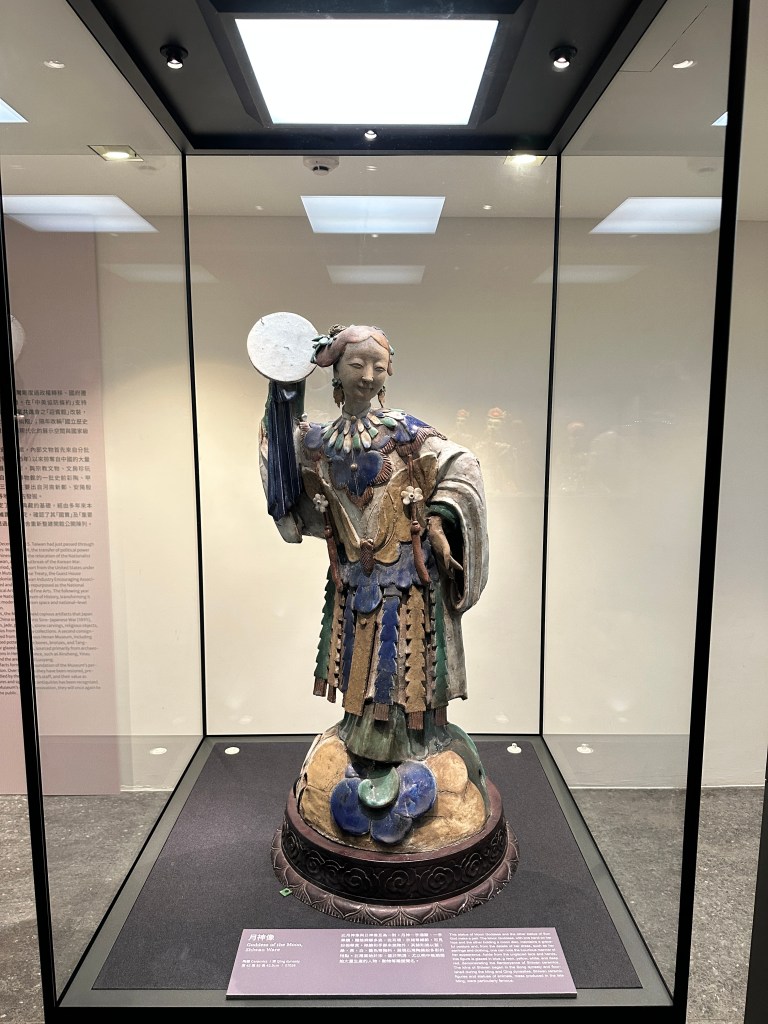
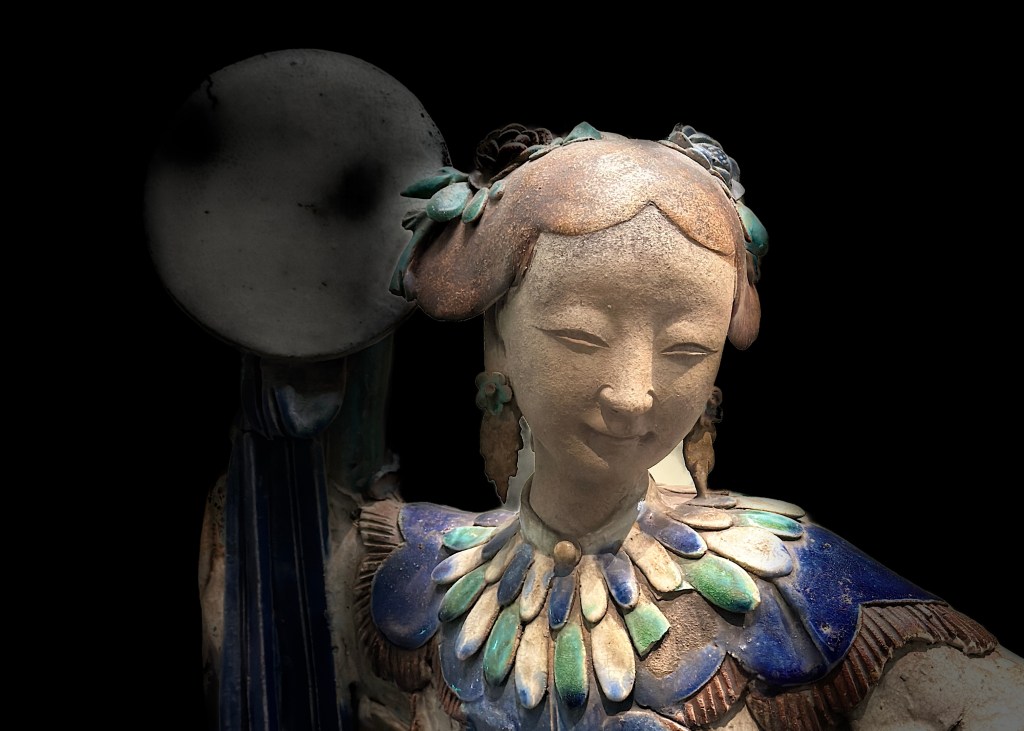
月神:一手擋臉、一手舉鏡,姿態多姿,顯 陰柔、內省、靜美
日與月:二元存在的最初原型
源自佛山石灣陶的「日月二神」雕像,以交織的釉色與生動的姿態呈現出宇宙最早的問句——
光與闇從何而分?動與靜如何共存?意識如何在二者之間生成?
日神邁步向前,一足踏出,像是文化中所有「外向的衝力」的化身:
創造、法則、意志、歷史的軌道。
月神舉鏡掩面,彷若向自身深處探尋:
感受、陰柔、冥想、生命的循環。
二者並置,構成了人類心靈最古老的範畴框架——
一切哲學的起點:對立之中的共生。
日與月不只是天體,而是意識投射出的「第一批符號」。
宇宙中的雙重時間:存在如何被時間塑造
從哲學上看,這對神像象徵**兩種時間性(temporalities)**的並存:
太陽時間:向外展開的歷史性(Historical Time)
太陽的運行定義了日與日之間的差異,使人類得以建立:
- 工作與秩序
- 進程與因果性
- 文明的可追溯史
這是一種 線性、累積、可度量的時間。
現象學家海德格(Heidegger)稱之為 「向世界投射」 的存在模式。
月亮時間:向內迴旋的生命性(Vital Time)
月亮的盈虧則塑造了生命的週期,將人類帶回:
- 生殖、潮汐、節令
- 情緒、潛意識
- 重複、復返、再生
這是一種 內在、節律性的時間,屬於榮格(Jung)所謂「集體無意識的呼吸」。
日月交替:時間的二元合奏
兩者共同構成世界真正的時間:
不是直線,也不是圓,而是直線與圓重疊的螺旋。
文明靠太陽前行,生命靠月亮重生。
人類則在日月的交會處,找到自己的方向。
意識的誕生:張力(Tension)如何生成自我(Self)
二神最深的哲學意涵,在於揭示一個重大命題:
精神不是統一中產生,而是從對立中湧現。
日神代表的:
- 光明
- 理性
- 結構
- 可解釋性
月神代表的:
- 黑暗
- 感性
- 無序
- 不可言說
兩者的互動構成了意識生成的母體。
如梅洛-龐蒂(Merleau-Ponty)所言:
「意識不是世界之外的觀者,而是世界張力的結果。」
在人類的心智中,
明亮的區分與黑暗的模糊、邏輯的推論與情感的潮汐,共同構成了『我』。
意識不是單一來源的火焰,而是日與月互相摩擦的火花。
因此,「日月二神」是一種人類精神結構的象徵模型:
自我是由對立而非一致生成的。
合一的智慧:在二元中看見圓滿而非勝負
哲學並非要求一方消除另一方。
真正的智慧在於理解:
光明需要黑暗來顯影,
秩序需要混沌來孕育,
前進需要迴返來補全。
在這個意義上,「日月」呈現的是:
存在論(Ontology)的雙重性,
知識論(Epistemology)的互補性,
價值論(Axiology)的平衡性。
兩位神像並立,像是向觀者宣告:
真正的圓滿,不是統一,而是兩個世界的並存。
「合一」並非抹去差異,而是讓差異彼此發光。
如同老子所言:
「有無相生,難易相成。」
日與月,就是「相生」的雕塑本身。
日月之間,精神得以誕生 ; 張力之中,意識得以開花
日神的步伐與月神的鏡面,不只是造像的姿態,而是宇宙對人類的啟示:
我們的生命、時間、精神、意識,皆在二元的呼吸中被創造。
因此,「日月二神」不僅美,更深具哲學性——
它是人類心靈結構的原型圖、
宇宙節律的象徵地圖、
也是關於意識如何誕生的沉默寓言。
The Two Deities of Sun and Moon
Consciousness, Time, and Cosmic Order Born Between Light and Shadow**
Sun and Moon: The Archetypal Duality of Existence
The Shiwanzhen ceramic sculpture “The Two Deities of Sun and Moon” from Foshan embodies, through its vibrant glazes and expressive forms, the earliest question the cosmos ever posed:
How did light and shadow divide?
How do motion and stillness coexist?
How does consciousness arise between two opposing poles?
The Sun Deity, stepping forward with one leg raised, embodies every outward-moving force of culture—
creation, order, will, the linear path of history.
The Moon Deity, one hand raised in reflection, one hand concealing her face, gathers into her posture the entire inner world—
sensitivity, introspection, stillness, the dreamlike rhythm of life.
Together, they form the oldest cognitive framework of humanity—
the philosophical origin of duality; two symbols from which meaning begins.
Two Modes of Time: How the World Shapes Existence
Philosophically, the two deities personify two temporalities that structure human experience:
Solar Time — Linear, Expansive, Historical
The sun’s rising and setting carve out the distinction between days.
It enables humanity to create:
- labor and order
- progress and causality
- the traceable arc of civilization
This is measurable, linear time,
what Heidegger would call the mode of “projection into the world.”
Lunar Time — Rhythmic, Cyclical, Vital
The moon’s waxing and waning shape the rhythms of life—
- tides and seasons
- feminine cycles
- agriculture and regeneration
This is inner, cyclical time,
akin to the breathing of the collective unconscious described by Jung.
The Alternation of Sun and Moon – A Double Weave of Time
The world does not unfold as a line or a circle;
it moves as a spiral,
where linear progression overlays cyclical return.
Civilization moves forward by the sun;
life renews itself by the moon;
and human meaning emerges at their intersection.
The Birth of Consciousness
How Tension Generates the Self
The deepest philosophical significance of the two deities lies in a profound insight:
The human spirit emerges not from unity, but from tension.
The Sun Deity symbolizes:
- clarity
- reason
- structure
- the explicable
The Moon Deity symbolizes:
- mystery
- emotion
- the unformed
- the ineffable
Consciousness arises in the interplay of these forces.
As Merleau-Ponty observed:
“Consciousness is not a spectator outside the world;
it is the effect of the world’s tensions.”
Thus, the “self” is not a monolithic flame.
It is a spark created by the friction of day and night,
logic and intuition, outward striving and inward return.
The two deities offer a symbolic model of the human psyche:
Selfhood is generated by opposition, not homogeneity.
Wisdom of Unity: Seeing Wholeness Through Duality
Philosophy does not demand that one force eclipse the other.
True wisdom lies in the recognition that:
Light requires shadow to reveal itself.
Order requires chaos to give birth.
Progress requires return to be complete.
In this sense, the Sun and Moon portray:
- the ontological duality of existence
- the epistemic complementarity of knowledge
- the axiological balance of value
Their coexistence does not represent conflict but resonance.
Unity is not the erasure of difference;
it is the illumination produced when two worlds coexist without collapsing.
As Laozi wrote:
“Being and non-being generate one another;
difficulty and ease complete one another.”
The Sun and Moon are a sculptural embodiment of this mutual generation.
Between Sun and Moon, the Spirit Arises ; Within Tension, Consciousness Blossoms
The step of the Sun Deity and the reflective mirror of the Moon Deity do more than display artistic form—
They reveal a cosmic truth:
Our life, our time, our spirit, our consciousnessare all created through the breathing of duality
“The Two Deities of Sun and Moon” is not merely beautiful;
it is philosophically luminous—
a symbolic map of the human psyche,
a poetic diagram of cosmic rhythm,
and a silent allegory of how meaning emerges in the world.


 PaliPali
發表留言