
After discussing five key indicators for humanoid robot development, I’d like to shift the focus to safety—a critical milestone for robots transitioning from controlled industrial environments to the unpredictable dynamics of daily life. As always, I approach this topic by drawing parallels from my experience with laptop development and examining the latest global advancements in humanoid robotics to offer some personal insights.
Relative State-of-Charge (RSOC) as a Case Study
Estimating the RSOC of batteries relies on methods like open-circuit voltage measurement, Coulomb counting, and dynamic voltage algorithm-based gauges. For laptops, dynamic algorithms often introduce errors, which necessitate mechanisms like battery learning to recalibrate and ensure performance stability. Yet, even with these mechanisms, laptops may still face performance issues or shutdowns caused by inaccuracies.
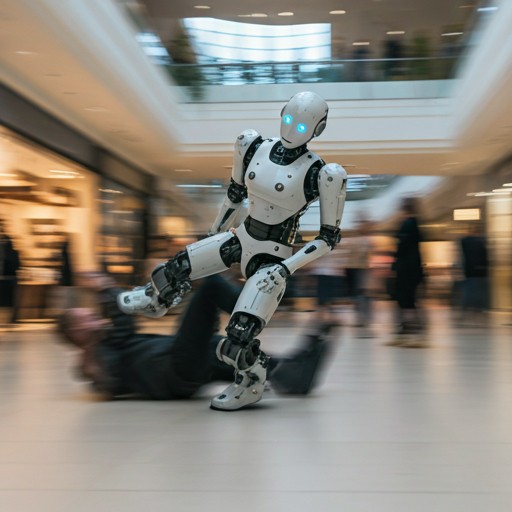
Now, imagine a humanoid robot operating at high speeds or under heavy loads. An RSOC estimation error in this context could result in consequences far beyond mere inconvenience or data loss. Unlike a laptop, a robot’s malfunction could lead to significant safety hazards, both for the machine and its surroundings.
This is why safety will be one of the most complex and resource-intensive challenges in humanoid robot development. As the world eagerly anticipates the arrival of humanoid robots in consumer markets, addressing these safety issues will require cutting-edge research, robust engineering, and careful allocation of resources.
The path to integrating humanoid robots into everyday life is exciting, but the journey hinges on solving these critical safety challenges. Only by overcoming these hurdles can we ensure that humanoid robots become reliable companions in our homes and beyond.
RSOC 相對電量狀態:人形機器人發展中的挑戰
在討論完人形機器人發展的五大關鍵指標後,我想將焦點轉向另一個關鍵里程碑──安全性。這是機器人從受控的工業環境邁向日常生活中不可預測情境所必須跨越的重要門檻。和以往一樣,我將透過我在筆記型電腦開發的經驗,結合當前全球人形機器人領域的最新進展,分享一些個人觀察與見解。
以 RSOC(相對電量狀態)為案例
評估電池 RSOC(Relative State-of-Charge,相對電量狀態)的方法通常包括開路電壓(OCV)測量、庫倫計數(Coulomb Counting)以及動態電壓演算法等。對於筆記型電腦而言,動態演算法經常會產生誤差,因此需要透過「電池學習」(Battery Learning)機制進行重新校正,以維持性能穩定。然而,即使有這些機制的輔助,筆電仍有可能因估算錯誤而導致效能下降,甚至異常關機。
但如果我們將這種 RSOC 錯誤套用在人形機器人身上,情況就不只是資料遺失或使用不便那麼簡單了。想像一台高速運作或處於高負載狀態下的人形機器人,若因 RSOC 判斷錯誤而導致系統失控,所造成的後果將遠比筆電更為嚴重,甚至可能對人或環境造成危害。
為何安全性成為最複雜的挑戰之一
正因如此,安全性將成為人形機器人發展中最複雜、資源投入最高的挑戰之一。隨著全球市場對人形機器人的高度期待與關注,如何確保其在日常生活中安全運作,將仰賴最尖端的研究技術、嚴謹的工程實踐,與充足的資源配置。
結語:從挑戰走向信任
人形機器人進入日常生活的旅程令人興奮,但這條路的成敗,將取決於我們是否能夠妥善解決這些關鍵的安全挑戰。唯有跨越這道門檻,我們才能真正迎來人形機器人成為居家與社會中可靠夥伴的時代。




 PaliPali
發表留言